Clicking when you chew, an ache in front of your ear, a jaw that will not open all the way or tightness when you wake up. Your jaw is a joint like any other, and joint mechanics can be fixed.
The temporomandibular joints sit just in front of your ears, where your lower jaw meets your skull. They are among the busiest joints in your body: every time you talk, chew, yawn or swallow, each side has to hinge and slide forward in a smooth, coordinated path. When one side stops moving in its preferred path, the chewing muscles spasm to protect it, and you feel pain, clicking or a jaw that will not open fully.

Both jaw joints have to work together. If one side hinges or glides less than the other, the jaw shifts as it opens, the joint can click or catch, and the muscles on that side work overtime. It is the same mechanical dysfunction we see in other joints, in a smaller space.
Many people clench during stress, concentration or sleep. Constant pressure tires and tightens the chewing muscles, leaving the jaw sore in the morning and the temples aching by the end of the day.
The jaw and the upper neck are closely linked. A forward head position from desk work changes how the jaw rests and loads the muscles under the jaw and at the base of the skull. Neck stiffness and jaw pain often travel together.
A blow to the jaw, whiplash, or holding your mouth open through a long dental appointment can strain the joint and leave it stiff or irritated. A big yawn or biting into something large can also set off symptoms.
Tension in the jaw muscles can refer pain into the temples, ear and teeth. If you have tension headaches as well as jaw pain, the two are often connected, and treating one helps the other.
Stress shows up in the jaw for many people, as clenching, a tight jaw at the end of the day or teeth pressed together without realizing it. When a joint is already irritated, that extra guarding keeps the muscles from ever fully relaxing, and the cycle continues.

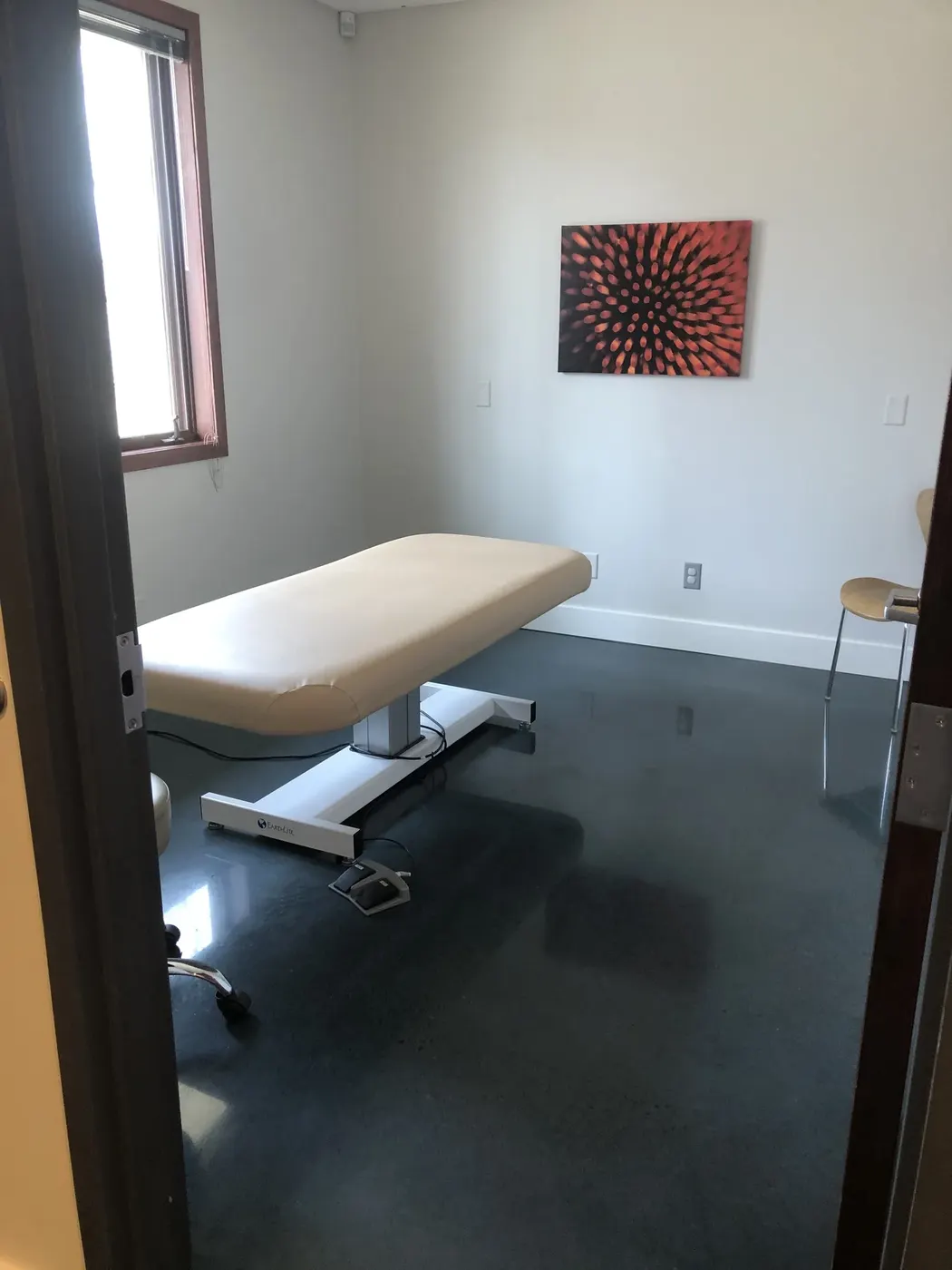
Your evaluation looks at how your jaw opens, closes and moves side to side, along with the motion of your neck and upper back. Using the F.A.S.T Approach™ (Facilitation, Activation, Systematic Therapy), we gently facilitate normal motion at the jaw and neck joints. When the joints move in their preferred path, the protective spasm in the chewing muscles can release. Mechanical pain can be relieved in as few as 3 visits.
Then we retrain control: a relaxed resting position for the jaw, smooth opening without shifting and posture habits that take the load off the joint. If your symptoms point to something that needs your dentist or physician, we will tell you. Sessions last about 30 minutes with the same therapist each visit.
Because the jaw, neck and upper back work together, treatment often includes the neck as well as the jaw itself. If tight bands in the jaw or neck muscles are slow to release, dry needling may help, and massage therapy with Jessica Lantz, CMT, is available at our Vadnais Heights clinic. Physical therapists can be seen directly in many cases, without a referral.
We measure jaw opening and side-to-side motion, note any clicking and check your neck and upper back. You learn what is driving your jaw pain.
Gentle facilitation restores motion at the jaw and neck joints so the chewing muscles can relax. We show you simple exercises to keep that motion.
We retrain smooth, even jaw movement and the posture and habits that protect the joint, so talking, chewing and sleeping stay comfortable.
Actually, I shouldn't be recommending Fixit at all because everybody I have sent loves it and is now taking up appointment times. Seriously, the clinicians at Fixit are unique in their approach and they have made a huge difference in the quality of life for me and my family.

Ease tension headaches at their source in the neck, upper back and jaw.

Free up stiff spinal joints and calm the spasm behind neck and low back pain, then build a stronger trunk.

Fibromyalgia, RA and long-term pain: treat the mechanical pain on top and build capacity gently.