Reaching for the top shelf, fastening a seatbelt or sleeping on your side should not hurt. When the shoulder stops moving the way it was built to, everything you do overhead becomes a negotiation.
The shoulder has more movement than almost any joint in your body, and that freedom comes at a price. To lift your arm fully overhead, the ball of the shoulder, the shoulder blade, the collarbone, the upper back and the neck all have to move together. When one link in that chain stops moving in its preferred path, the muscles around it spasm to protect it, and you feel pain, stiffness and a weakness that is not true weakness at all.
A frozen shoulder can make it feel as though your arm is stuck at your side. Much of that pain and lost motion comes from a secondary muscle spasm around joints that have stopped gliding. Movement starts at the joint level, so restoring the small, precise joint movements is what gives the shoulder back its full range.
Full shoulder elevation depends on full motion in your neck and upper back. If the joints of your mid back are stiff from sitting, or your neck is locked up, the shoulder is forced to make up the difference. That is why we treat the whole upper quadrant, not only the joint that hurts.
The rotator cuff tendons run through a tight space at the top of the shoulder. When the shoulder blade and the ball of the joint are not moving in sync, those tendons get pinched and irritated with every reach. Correcting the mechanics takes the pressure off and lets the irritated tissue calm down.
Repeated overhead work, lifting kids, swimming, throwing and racquet sports all ask a lot of the shoulder. Push past the range you can control and a joint can get stuck, leaving a nagging ache that rest alone never seems to clear.
After a fracture, a dislocation or shoulder surgery, scar tissue and protective guarding can limit motion long after the tissue has healed. Gentle joint facilitation and progressive loading help you recover the range and strength the injury took away.
Tissue naturally tightens while you sleep. If a shoulder joint is already stuck, lying on that side or with your arm overhead can add enough pressure to wake you up, and mornings start stiff. Restoring the joint's motion is what lets you sleep through the night again.
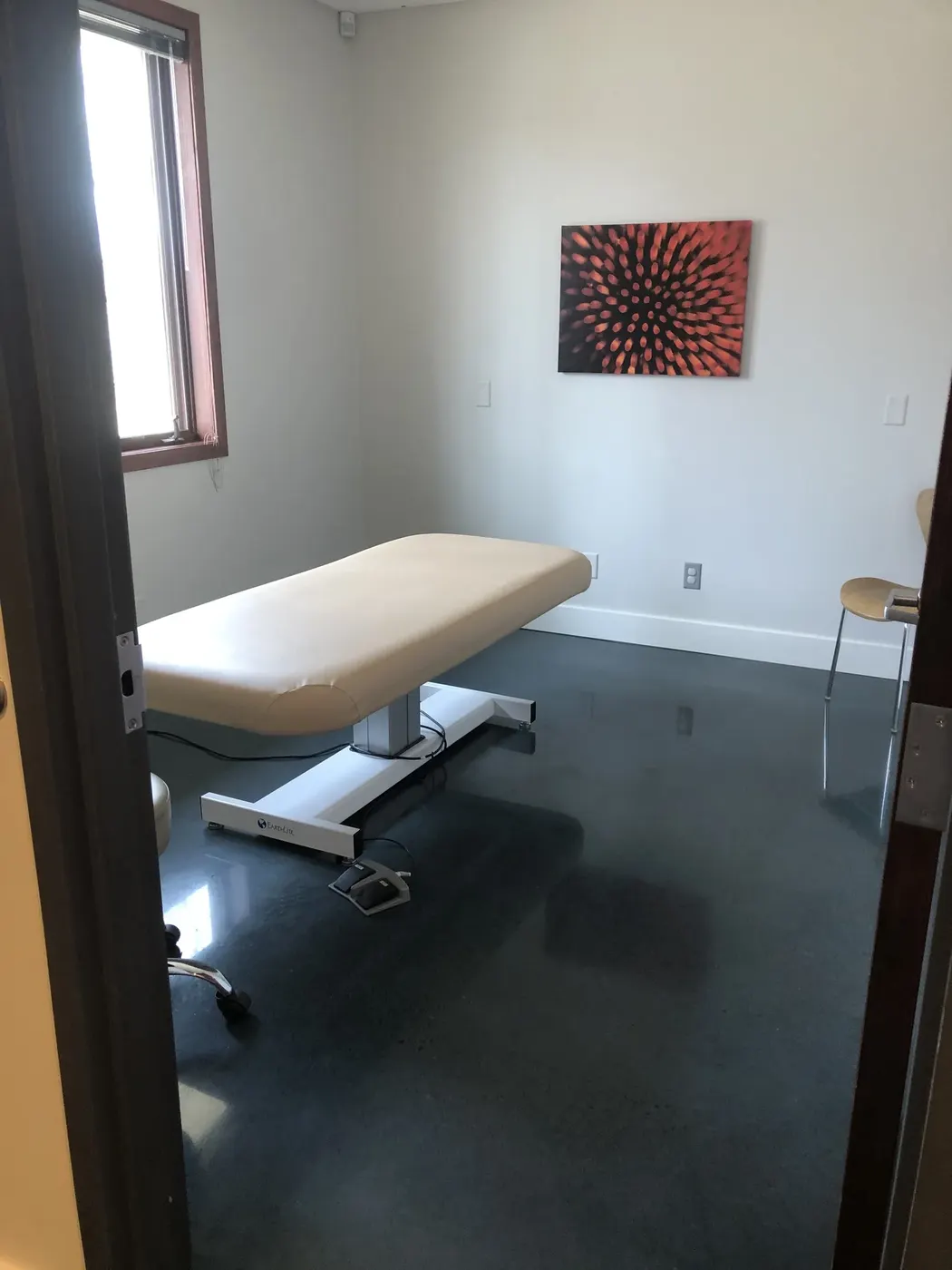

Your first visit is a Master Evaluation of your neck, upper back, shoulder blade and shoulder. Using the F.A.S.T Approach™ (Facilitation, Activation, Systematic Therapy), we find which joints are not moving in their preferred path and gently restore that motion with precise, hands-on facilitation. As the joint moves normally, the protective spasm lets go and range of motion returns. Mechanical pain can be relieved in as few as 3 visits.
Then we build. Shoulder control and power keep the joint centered when you lift, push, throw and reach, so we progress your strength work until those everyday and athletic demands feel easy again. If deep trigger points are still holding tension, dry needling can help reset them. You see the same therapist each visit, and every session lasts about 30 minutes.
We test the motion of your neck, upper back, shoulder blade and shoulder, check strength and look at the movements that bring on your pain. You leave knowing why your shoulder hurts and what we will do about it.
Gentle joint facilitation restores normal glide so the secondary spasm can release. We give you simple movements to use at your new range between visits, because tissue adapts through everyday repetition.
Once motion is back, we load the rotator cuff, shoulder blade and trunk progressively so you can lift, carry, swim, throw and sleep comfortably, and keep the results.
I’ve told so many people about you. And they have all been amazed. The first time I went it was a miracle after 1 visit. Had something come up with my shoulder that I haven’t been able to kick, remembered you guys and bam….. 95% better today. I’m always in awe and you guys are so knowledgeable and informational. Thank you!

Free up stiff spinal joints and calm the spasm behind neck and low back pain, then build a stronger trunk.

Calm tendinitis, De Quervain's and thumb pain by restoring motion at the wrist and elbow.

Correct mechanical joint dysfunction, healthy tissue loaded the wrong way, and build lasting strength.